

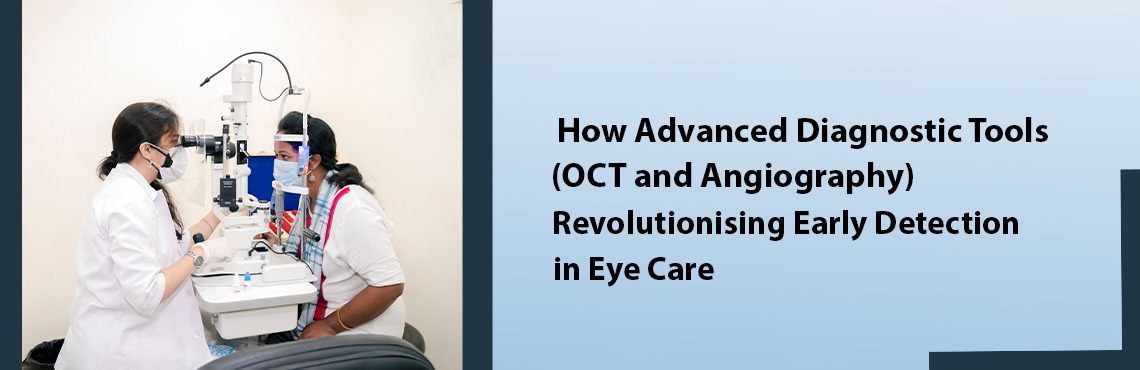
Early detection is the backbone of modern ophthalmology. With India witnessing a steady rise in diabetic eye disease, glaucoma, and age-related macular degeneration (AMD), early diagnosis is no longer optional—it is essential. According to estimates, over 77 million Indians live with diabetes, placing them at high risk for diabetic retinopathy. Similarly, glaucoma affects 11–12 million people nationally. In both cases, patients often have no symptoms until the disease is advanced.
This is where modern imaging tools like Optical Coherence Tomography (OCT) and Retinal Angiography are creating a silent revolution across Indian hospitals and eye-care networks.
What Is OCT and Why Is It Transformative?
OCT is often described by Indian ophthalmologists as the “MRI of the eye.” It uses light waves to capture high-resolution, cross-sectional images of the retina and optic nerve—down to microns.
Why OCT has become indispensable:
- Early detection of diabetic retinopathy:
OCT can identify macular oedema (swelling) even before vision becomes blurry. This is critical because diabetic macular oedema is one of the leading causes of vision loss in working-age Indians. - Monitoring glaucoma progression:
OCT precisely measures the retinal nerve fibre layer (RNFL), allowing detection of nerve damage even when eye pressure appears controlled. - Identifying age-related macular degeneration:
With India’s ageing population, AMD cases are rising. OCT can detect early drusen deposits and subtle structural changes long before the patient notices visual distortion. - Post-surgery monitoring:
After procedures like cataract or LASIK, OCT helps check macular health and rule out complications.
The biggest advantage is that OCT is non-invasive, painless, and repeatable, allowing hospitals to track disease progression over time with very high accuracy.
Retinal Angiography: Visualising Blood Flow in Real Time
Fluorescein Angiography (FA) and the newer OCT Angiography (OCTA) allow doctors to see blood flow within tiny retinal blood vessels. In a country where diabetic retinopathy has become a major public health issue, angiography plays a crucial role.
What angiography helps detect early:
- Microaneurysms and leaking vessels in diabetes
- Neovascularisation (abnormal blood vessel growth)
- Retinal vein occlusions
- Ischaemia (areas of poor blood supply)
- Complications after eye surgeries
Traditional FA requires a dye injection, while OCTA, now widely available in Indian tertiary centres, does not require dye and provides 3D vascular maps in seconds.
Why Early Detection Matters So Much in India
Many Indian patients seek care only after vision loss begins. But by then, damage may already be irreversible. Studies and clinical audits across major Indian institutions consistently show that timely imaging can reduce vision loss by up to 50–60% in diabetic retinopathy and glaucoma cases through earlier intervention.
Furthermore:
- India is projected to become the diabetes capital of the world by 2045.
- Cataract remains the leading cause of blindness, but retinal diseases are rapidly increasing.
- Urban lifestyle diseases (hypertension, obesity) are contributing to more optic nerve and vascular eye disorders.
OCT and angiography address this challenge by providing early, accurate, and patient-friendly diagnostics that fit into routine outpatient visits.
The Future: Precision Eye Care
The adoption of OCT and angiography across India—from metros to tier-2 cities—is enabling ophthalmologists to diagnose earlier, treat more precisely, and preserve sight more effectively. As AI-enabled OCT interpretation and portable angiography devices become mainstream, early detection will become even more accessible.