

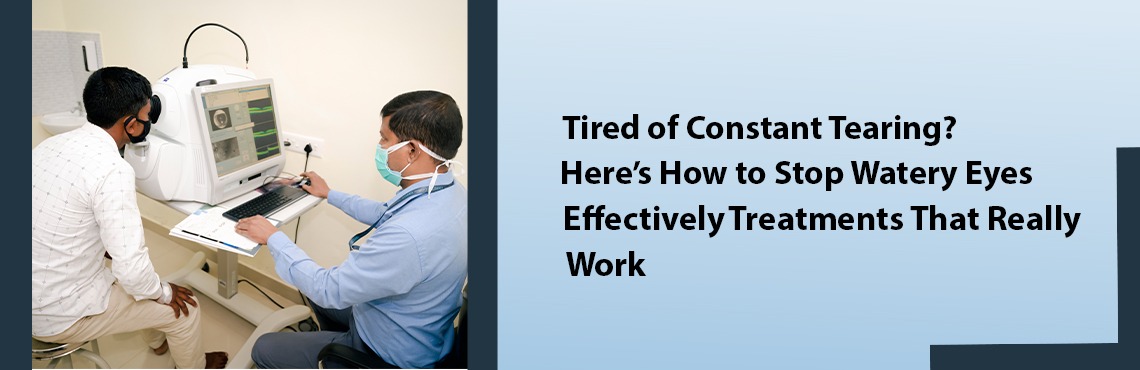
Watery eyes—or epiphora, as ophthalmologists call it—are among the most common complaints in Indian eye clinics. While many patients assume it is “just irritation,” excessive tearing can signal underlying problems that require targeted treatment. In fact, clinical audits across Indian tertiary centres show that up to 30–40% of patients with chronic tearing have a partial or complete blockage in their tear drainage system.
The good news: most causes of watery eyes are treatable, often with simple, minimally invasive procedures.
Why Do Eyes Water Constantly?
1. Blocked Tear Ducts (Nasolacrimal Duct Obstruction)
In adults, this is the most common reason for persistent tearing. Blockage prevents tears from draining into the nose, causing them to overflow.
2. Dry Eye Disease (Yes, dry eyes can water!)
Due to pollution, increased screen time, and AC exposure, dry eye is rising rapidly in India. When the eye becomes dry or irritated, it reflexively produces excess tears.
3. Eyelid Malposition
Conditions such as:
- Entropion (lid turns inward)
- Ectropion (lid turns outward)
affect tear drainage and cause tearing, especially in older adults.
4. Allergies and Eye Surface Inflammation
Seasonal allergies, dust, pollution, and chronic conjunctivitis are common Indian triggers.
5. Children & Infants
Nearly 20% of Indian newborns experience congenital nasolacrimal duct obstruction, which typically resolves but sometimes requires intervention.
How Specialists Diagnose the Cause
Indian ophthalmologists use a structured evaluation:
- Slit-lamp examination
- Tear breakup time (TBUT) for dry eye
- Syringing and probing to check tear duct patency
- Dacryoendoscopy or nasal endoscopy (in advanced centres)
- OCT of ocular surface for certain dry eye/eyelid disorders
Accurate diagnosis ensures proper, tailored treatment—because watery eyes are not the same in every patient.
Effective Treatments for Watery Eyes
1. Medication for Dry Eye & Allergies
- Lubricating drops (preservative-free preferred)
- Anti-allergic drops
- Anti-inflammatory medications for meibomian gland dysfunction
Dry eye is one of the fastest-growing causes in urban India; lifestyle correction is often essential.
2. Punctal Procedures
If the tear drainage opening (punctum) is narrow or blocked, procedures include:
- Punctal dilation
- Punctoplasty (quick OPD procedure)
These are commonly performed in Indian eye hospitals and show high success rates.
3. Probing for Tear Duct Block in Children
Typically done between 6–12 months of age, probing helps open the blocked duct in newborns. Success rates in Indian centres exceed 85–90% when performed within the first year.
4. DCR Surgery (Dacryocystorhinostomy) – Gold Standard
For adults with nasolacrimal duct obstruction, DCR surgery is considered the definitive treatment.
Two types:
- External DCR
- Endoscopic (nasal) DCR
Both create a new pathway for tears to drain into the nose. Success rates in leading Indian institutions are above 90–95%.
5. Eyelid Correction Surgery
For entropion, ectropion or eyelid laxity, minor corrective surgery can completely resolve tearing.
When Should You See an Eye Specialist?
Seek evaluation if tearing is:
- Persistent for more than 4 weeks
- Associated with redness, pain, or discharge
- Affecting day-to-day work or driving
- Worse in windy or outdoor environments
- Present in infants beyond 6–9 months
Watery eyes may seem like a minor irritation, but they often reflect a correctable medical issue. Indian ophthalmologists stress that proper diagnosis is the key, because treatment varies widely—from simple lubricants to corrective surgery. With modern diagnostic tools and high-success minimally invasive procedures, persistent tearing can almost always be solved.